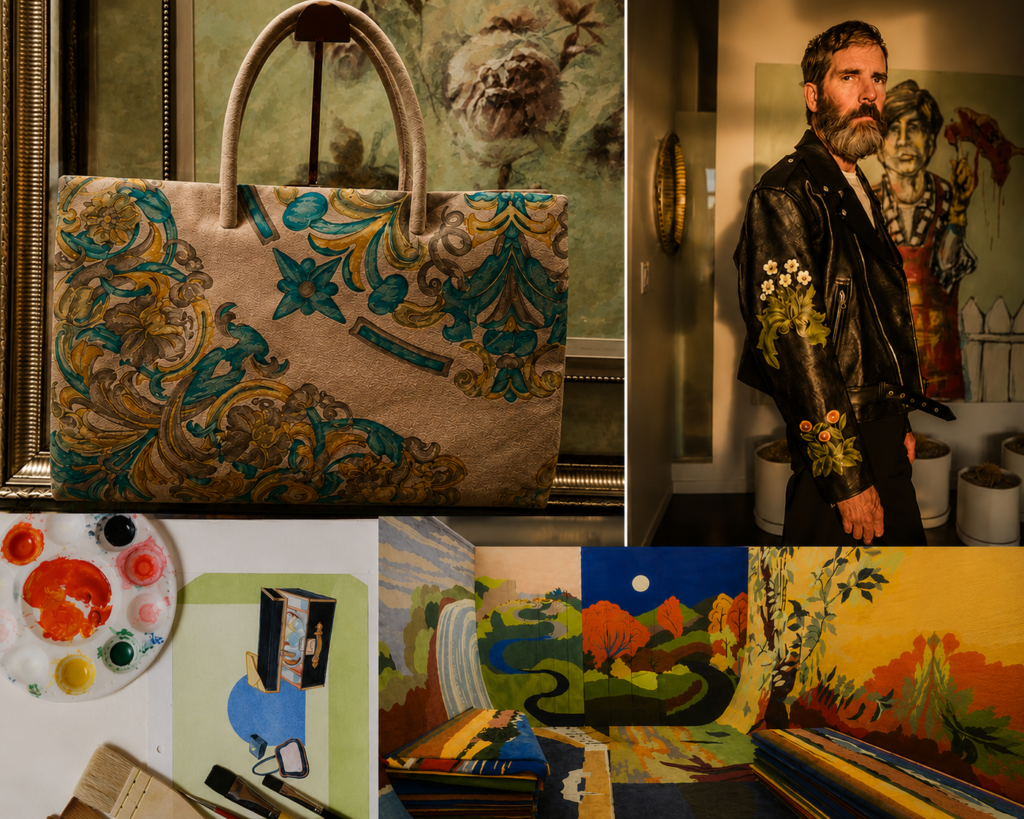
The most coveted bag in the world takes one artisan 18 hours to make by hand. Hermès doesn’t hide that. They advertise it.
For decades, luxury was defined by the absence of error. Flawless finishes, polished campaigns, and products that appeared untouched by human hands became the global shorthand for quality and exclusivity.
But something has shifted. Today, some of the world’s most desirable brands are moving in the opposite direction — celebrating hand-drawn illustrations, visible brushstrokes, handmade finishes, and unfiltered glimpses of the creative process. In a world where technology can make almost anything look perfect, what feels distinctly human has become the new rare.
What Hermès Understood That Most Brands Didn’t
When something is handmade, it carries evidence of the person who made it.
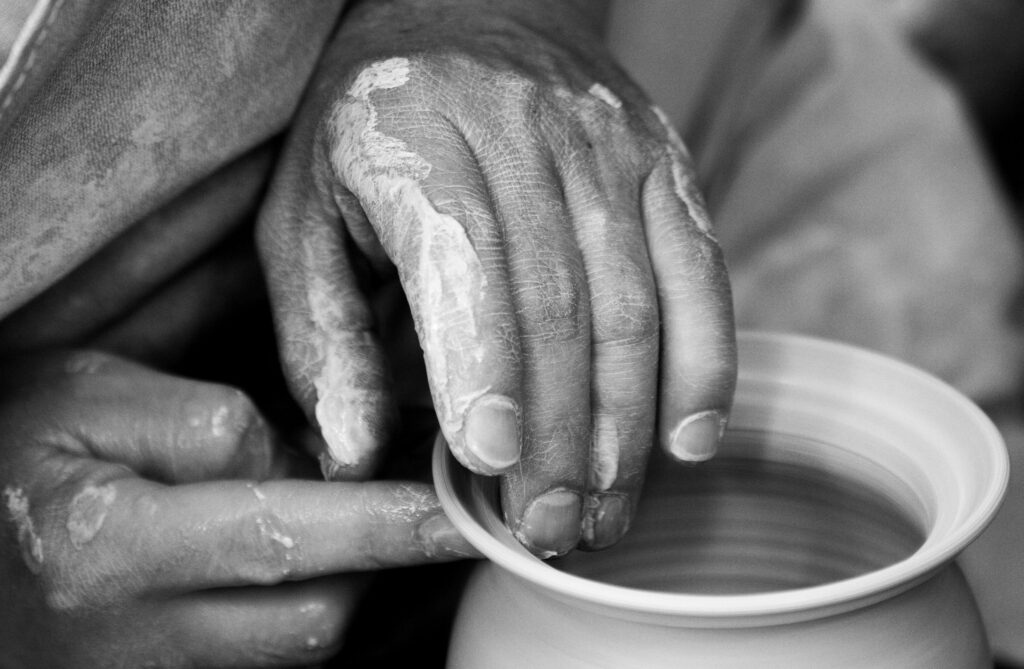
A ceramic piece may have slight variations in texture. A sketch may reveal erased lines and revisions. A hand-painted sign may not be perfectly symmetrical. These are not flaws. They are proof of time, effort, and craft — and increasingly, they are exactly what makes something feel worth having.
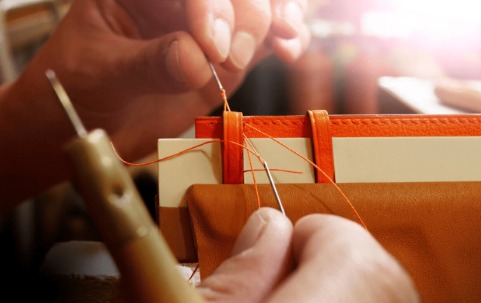
Hermès has long understood this. The brand regularly draws attention to the artisans behind its products: the specific techniques, the years of training, the hours invested in a single piece. The emphasis isn’t on the object alone, but on the human story behind it. In doing so, Hermès reframes the handmade not as a limitation of scale, but as the point entirely.
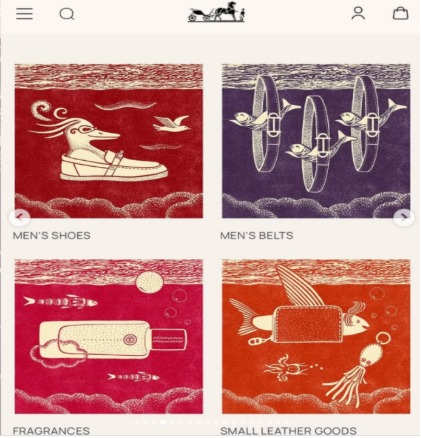
Hermès Craftsmanship — The brand draws attention to the artisans and techniques behind each piece, positioning handwork as the product's most valuable quality.
This Isn’t Just a Western Story
Here’s what often goes unacknowledged in conversations about craft and contemporary design: India has been doing this for centuries.
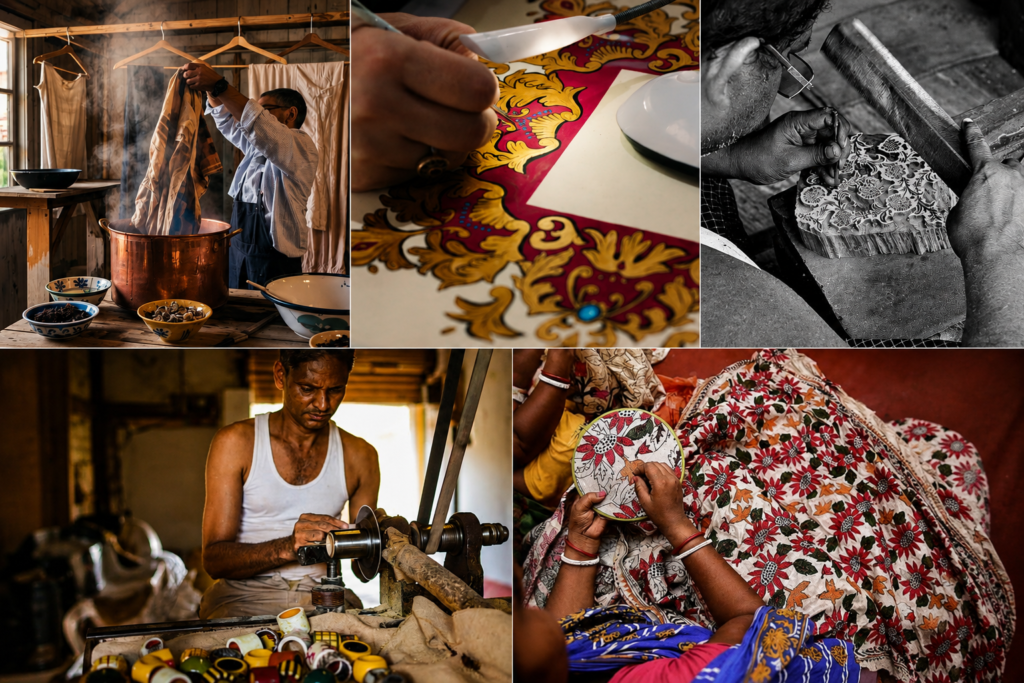
Block printing, bidriware, kantha embroidery, Channapatna lacquerware — these traditions are built on the logic of the hand-touched, the one-of-a-kind, the object that carries the maker’s trace. For a long time, that was seen as a marker of the informal or the vernacular. Today, global luxury is catching up to what Indian craft traditions have always known.
Designers like Sabyasachi and Raw Mango have built powerful identities around visible handwork — uneven weaves, natural dyes, and the texture of hand-loomed fabric. Their work doesn’t apologise for imperfection. It insists on it. And the market has responded.
There is also a philosophical parallel worth naming. The Japanese concept of wabi-sabi celebrates beauty in impermanence and asymmetry. India has long embraced a similar sensibility through objects that are made, used, repaired, and remade — from cracked terracotta pots to hand-lettered signboards. What was once seen as ordinary is increasingly shaping global ideas of beauty and value.
Why Are Brands Embracing This Now?
As technology becomes more sophisticated, perfection becomes easier to achieve — and therefore cheaper. When flawless visuals and polished experiences become the default, they stop feeling distinctive.
The response, for many brands, has been to turn toward the handmade, the collaborative, the process-led. Loewe frequently incorporates hand-drawn illustrations and artist collaborations into its visual identity — not as decoration, but as a statement about what the brand values. By celebrating artistic expression and the marks of making, they create experiences that feel personal and memorable in ways that machine-perfect output simply cannot.
Loewe Artistic Collaboration — Handcrafted visual elements and artist partnerships have become central to how contemporary luxury brands communicate distinctiveness.
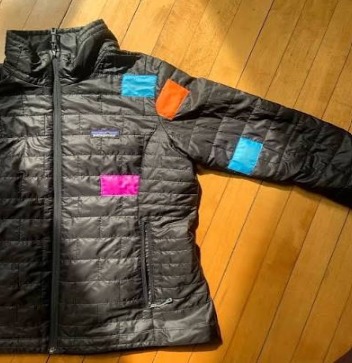
Patagonia Worn Wear — A campaign that repositioned repair and use as markers of quality, not decline.
The shift isn’t only in fashion. Patagonia’s Worn Wear campaign celebrated repaired and well-used garments, treating frayed hems and patched knees as evidence of a life lived. Signs of wear became signs of value rather than something to hide.
What This Means for Anyone Building a Creative Practice
This growing appreciation for craft and handwork is not only changing what consumers buy — it’s changing what skills are valued, who gets commissioned, and what a creative career can look like.
Brands are increasingly collaborating with illustrators, ceramicists, photographers, craftspeople, and multidisciplinary artists to create work that feels distinctive and personal. The demand for makers — people who can bring a genuine point of view and a visible hand to their work — is real and growing.
For students building creative portfolios, this is worth sitting with. They show process, revision, and a point of view. Admissions committees at RISD, UAL, Parsons, and Pratt are not looking for perfection. They are looking for evidence of a thinking, feeling person — someone who takes risks, makes decisions, and leaves their mark on the work.
Final Thoughts
Perhaps imperfections were never the problem. Perhaps they were always the point.
In today’s creative landscape — across luxury, craft, fashion, and design — what communicates value is no longer the absence of the human hand. It is its presence: in the uneven glaze, the revised sketch, the fabric that no machine could replicate.
At Artiste 360, we encourage students to embrace experimentation, process, and individuality from the very beginning. Some of the most meaningful creative work — and some of the strongest portfolios we have seen — emerge not from striving for perfection, but from allowing room for curiosity, exploration, and the unexpected.